

Shop The Most Popular Manual Wheelchairs
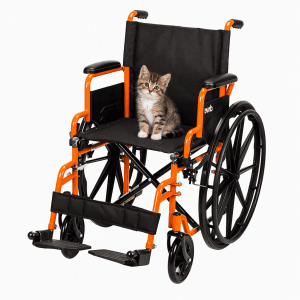
🦽 Looking for a Popular Manual Wheelchair? Here’s How to Pick the Right One
The right wheelchair is the one that fits the person using it: their hips, their weight, their car trunk, and how many hours a day they sit in it. Below are popular picks, plus our measuring guide so you get the size right the first time and avoid a return.
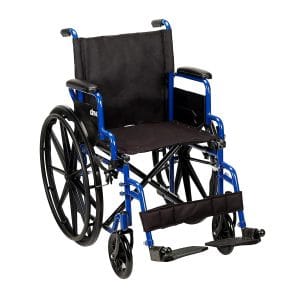
Drive Medical Blue Streak Wheelchair
#ad · A popular everyday self-propel wheelchair with a sturdy steel frame and flip-back desk arms, so you can roll right up to a table.
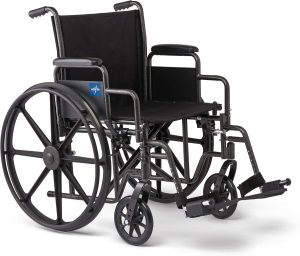
Medline Comfortable Folding Wheelchair
#ad · This popular wheelchair has a weight capacity of 300 lbs and an 20″W X 16″D seat.
💲 Prices, sizes, and configurations change on Amazon over time. Many wheelchairs come in 16″, 18″, and 20″ seat widths with different footrest options, so confirm you’re ordering the size and options you measured for.
📋 Before You Buy: Questions to Answer First
Time saver: if the user already has a wheelchair that fits and is comfortable, use its measurements. You’ll find the seat width and depth on the label under the seat or in the manual.
If this is a first wheelchair, talk with the doctor or a physical/occupational therapist first if you can. They can tell you about any special needs, like a cushion for pressure sores or a lower seat for foot-propelling. Once you know what you need, buying online can save a lot of money.
- How many hours a day will the user sit in the chair? All-day users need a better fit, a lighter chair, and a good cushion.
- What does the user weigh? Be accurate, then add about 10% for a safety margin. Pick a chair rated above that.
- Will the user push themselves, or will someone else do the pushing? Self-propelling needs large rear wheels.
- Where will it be used? Home, office, stores, parks, and travel each favor a different type.
- Does it need to fit in a car trunk, van, or bus? Check the folded width and the weight a helper can lift.
- Will you need a ramp or vehicle lift at home or for the car?
🦽 Which Type of Manual Wheelchair Do You Need?
Manual wheelchairs are grouped mostly by frame weight and weight capacity. Medicare uses the same groups, so the codes in the right column can help when you talk to a doctor or supplier.
| Type | Typical chair weight | Best for | Medicare code |
|---|---|---|---|
| Standard | About 36–45 lbs | Short daily use, occasional outings, the lowest price | K0001 |
| Hemi (lower seat) | About 36–45 lbs | Shorter users and people who push with their feet; the seat sits about 2″ lower | K0002 |
| Lightweight | Under 36 lbs | Daily users who push themselves; easier to lift into a car | K0003 |
| High-strength lightweight / ultralight | Under 34 lbs / under 30 lbs | Full-time, active users who push all day | K0004 / K0005 |
| Heavy-duty (bariatric) | 50+ lbs | Users over 250 lbs; reinforced frames and wider seats | K0006 / K0007 |
| Reclining or tilt-in-space | Heavier than standard | Users who need head and neck support or pressure relief from sitting long hours | Varies |
Rule of thumb: a standard chair is fine for part-time use. If the user sits in the chair most of the day or pushes themselves, the extra cost of a lightweight chair pays off quickly in less fatigue. For users over 250 lbs, always choose a heavy-duty chair rated above their weight; standard frames aren’t built for it.
📏 How to Measure for a Manual Wheelchair
Getting the size right is what makes a wheelchair comfortable and safe. Have the user sit in a firm chair, wearing the shoes they usually wear, and use a soft tape measure. These rules of thumb fit most users; special cases are best measured by a therapist.
- Seat width: measure hip to hip at the widest point (keep the tape flat), then add 1–2 inches. Too narrow causes pressure sores; too wide makes it hard to reach the wheels and to fit through doorways.
- Seat depth: measure from the back of the hips to the back of the knee, then subtract 1–2 inches, so the seat edge doesn’t press behind the knees.
- Seat height: the user should be able to sit with feet supported and get up to tables and transfer without strain. Users who push with their feet usually need a lower “hemi” seat.
- Footrest length: measure from the back of the knee to the bottom of the heel, wearing shoes.
- Back height: usually just below the shoulder blades, high enough for support without limiting arm movement when pushing.
Using a cushion? Add the cushion’s thickness to every measurement except seat depth. A 3-inch cushion raises the user 3 inches, which changes how they reach the wheels, the armrests, and the table.
Doorways: a chair’s open width is usually about 7–8 inches wider than its seat width. Measure your narrowest doorway before ordering.
Frequently Asked Questions
What’s the difference between a wheelchair and a transport chair?
A manual wheelchair has large rear wheels the user can push themselves. A transport chair has four small wheels and must be pushed by someone else. Transport chairs are lighter and fold smaller, but the user can’t move on their own.
What size wheelchair do I need?
Measure hip to hip while seated and add 1–2 inches for the seat width. Most adults fit an 18-inch seat; smaller users often need 16 inches and larger users 20 inches or more. Then check seat depth and the weight capacity. See the measuring guide on this page.
How much does a manual wheelchair weigh?
Standard steel wheelchairs weigh about 36–45 pounds. Lightweight models are under 36 pounds, and ultralight chairs can be under 30 pounds. Removing the footrests makes any chair lighter to lift into a car.
Will Medicare pay for a manual wheelchair?
Medicare Part B can cover a manual wheelchair as durable medical equipment when a doctor documents that you need it for use in your home. You typically pay 20% after the Part B deductible, and you must get it through a Medicare-enrolled supplier. A chair bought on Amazon is generally not reimbursed.
Will a wheelchair fit in my car trunk?
Most folding wheelchairs fold to about 12–13 inches wide, which fits most trunks and SUVs. Remove the footrests first to save space and weight. If lifting is hard, a lightweight chair or a vehicle lift can help.
Swing-away footrests or elevating leg rests — which do I need?
Swing-away footrests are standard and move aside for transfers. Elevating leg rests raise the legs, which helps with swelling, leg injuries, or knee problems. Choose elevating leg rests only if a doctor recommends them, since they add weight and length.
As an Amazon Associate I earn from qualifying purchases.