
Mobility Scooter & Power Wheelchair Battery Sales & Buying Guide
🔋 Scooter & Wheelchair Batteries: Get the Terminal & Size Right First – Before You Buy
IMPORTANT: Replacement batteries and a compatible charger for mobility scooters and power wheelchairs. Getting the wrong battery isn’t just a wasted purchase — the wrong terminal type, wrong dimensions, or charger can damage your equipment or create a real safety hazard. Read the safety notes and READ FAQs below before you buy. We list the most popular batteries below for standard mobility devices. If your battery is not listed here then use View All Batteries. If you have any other questions then Ask EasyMed’s AI Technician.
As an Amazon Associate we earn from qualifying purchases.
⚠️ Safety Warning: Read Before You Buy, Handle or Charge Any Battery
Chemical burn risk: Sealed lead-acid (SLA/AGM/Gel) batteries contain corrosive sulfuric acid electrolyte. It’s normally sealed inside, but a cracked, punctured, swollen, or otherwise damaged case can leak electrolyte that causes real chemical burns to skin and severe eye damage. If you spot cracking, swelling, or leaking, don’t handle it barehanded — wear gloves and eye protection, and rinse any skin or eye contact with water immediately and seek medical attention.
Explosion risk during charging: Charging a lead-acid battery produces hydrogen gas, which is flammable and can build up to explosive concentrations in an enclosed, poorly ventilated space. Always charge in a well-ventilated area, away from open flames, sparks, or lit cigarettes.
Electrical shock and burn risk: At the 24-volt level most scooters and power chairs run (two 12V batteries in series), a serious shock isn’t the main concern — a burn is. A metal tool or piece of jewelry bridging both terminals at once can spark, burn skin, or short the system. Remove jewelry before working on a battery, and keep tools away from both terminals simultaneously.
Wasted time and money: A wrong-size battery usually means a return shipping label and a second wait for the right one — and if you only catch the mismatch after installing it, you’ve lost the return window on top of that. A battery that’s the right voltage but the wrong terminal type can also seem to work at first, then deliver an unreliable connection that drains faster than it should. Read the FAQs below — in most cases it takes just a few minutes to confirm the four things that actually matter before you order.
If you have any other questions then Ask EasyMed’s AI Technician.
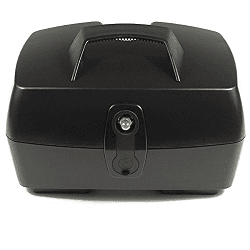
Battery Pack for Pride Go-Go Elite Traveller Plus & Go-Go Sport Scooters
An 18AH upgrade or replacement pack for Pride Go-Go Elite Traveller Plus and Go-Go Sport scooters, delivering roughly 15 miles of range and arriving fully charged. Before ordering, confirm your scooter actually uses an 18AH pack (some Elite Traveller trims ship with a smaller 12AH battery) and that the terminal style matches what’s currently installed — an 18AH pack is also physically larger than a 12AH one, so it needs to fit your specific battery compartment. If you have any other questions then Ask EasyMed’s AI Technician.
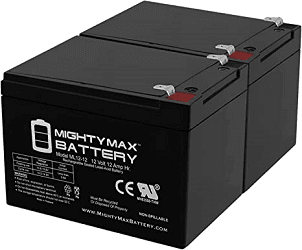
12V 12AH Battery for Pride Mobility Go-Go Scooters (other scooters too)
A 12V 12AH sealed lead-acid battery sized for the Go-Go scooter models (can work for other scooters). Check dimensions for your scooter – measuring 5.94″ x 3.86″ x 3.98″ with an F2 terminal. This listing is for the battery only — no wire harness or mounting hardware included — so if your existing harness is damaged or missing, you’ll need to source that separately. Many scooters use two of these in series for a 24V system, so plan to replace both as a matched pair. If you have any other questions then Ask EasyMed’s AI Technician.
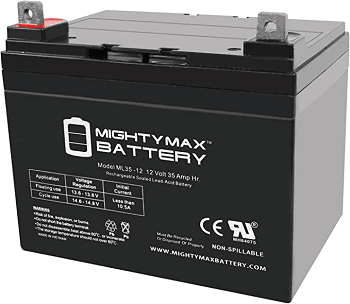
Mighty Max ML35-12 12 Volt 35AH SLA Battery
A general-purpose 12V 35AH sealed lead-acid (SLA) battery, maintenance-free and rechargeable. Check dimensions – measuring 7.5″ x 7.75″ x 5″. Because this is a general SLA battery rather than a scooter-specific listing, double-check both the terminal type (F1 vs. F2, or bolt-style) and the physical dimensions against your battery compartment before ordering — a 35AH battery is noticeably larger and heavier than the 12-18AH batteries used in smaller travel scooters. If you have any other questions then Ask EasyMed’s AI Technician.
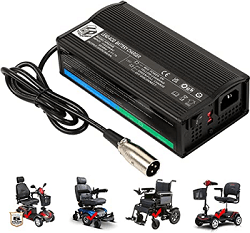
ENCAREFOR 24 Volt 4.0 Amp Lead-Acid Battery Charger
A 24V 4A charger built specifically for lead-acid batteries in electric wheelchairs and scooters, using constant-current output for a faster, more consistent charge. It includes built-in protection against reverse polarity, short circuits, overvoltage, overcurrent, overcharging, and overheating — meaningful safety margin compared to a generic or mismatched charger. Confirm this is a 24V charger specifically matched to your scooter’s battery system before buying; using a charger with the wrong voltage is a real way to damage both the battery and the scooter’s electronics. If you have any other questions then Ask EasyMed’s AI Technician.
💲 Prices, availability, and specific model configurations change on Amazon over time. Confirm current pricing, terminal type, and physical dimensions against your specific scooter or wheelchair model before purchasing.
Frequently Asked Questions
How do I know which battery is the right replacement for my scooter or wheelchair?
Four things all have to match: voltage (almost always 12V per battery, with most scooters using two in series for 24V), amp-hour capacity (AH — matching the original keeps your range the same), physical dimensions (the battery has to physically fit your compartment), and terminal type (F1, F2, or bolt-style, so your existing wiring connects correctly). Missing any one of the four is the most common reason a replacement battery doesn’t work out.
What’s the difference between an F1 and F2 terminal, and does it actually matter?
Yes, it genuinely matters. F1 terminals measure 0.187 inches wide, F2 terminals measure 0.25 inches wide — only a 1/16-inch difference, but enough that the wrong one won’t make a secure connection. F2 terminals are typically used on higher-current, heavier-duty batteries. Adapters exist to convert between F1 and F2, but matching the original terminal type directly gives a more secure, reliable connection than relying on an adapter.
Why does the physical size of the battery matter if the voltage and AH match?
Because it still has to physically fit inside your scooter’s battery compartment. Compartments are sized for a specific battery footprint, and even a battery with the exact right voltage and capacity can be a few millimeters too tall, wide, or deep to close the compartment or sit securely. Measure your current battery (or the compartment itself) before ordering, rather than assuming a listing’s stated compatibility covers your exact model.
What’s the difference between SLA, AGM, and Gel batteries?
SLA (Sealed Lead-Acid) is the umbrella category — both AGM and Gel batteries are types of SLA battery. AGM (Absorbent Glass Mat) batteries are generally more affordable and charge faster, making them the most common choice for standard mobility scooter use. Gel batteries tend to last longer and perform better in extreme temperatures, but usually cost more. For most everyday users replacing a standard scooter battery, AGM is the typical choice unless your original battery was specifically Gel.
Should I upgrade to a lithium battery instead of replacing with the same SLA type?
Only if your scooter’s manufacturer confirms it supports lithium. Lithium batteries are lighter, charge faster, and often last longer than SLA, but they are not a universal drop-in replacement — the scooter’s charging system and internal wiring need to be compatible. Check your owner’s manual or contact the manufacturer directly before assuming a lithium upgrade will work with your existing charger and electronics.
Do I need to replace both batteries at once, or can I just replace the weak one?
Replace both as a matched pair. Most mobility scooters run a 24V system made of two 12V batteries in series, and pairing a new battery with an old, weaker one creates an imbalance — the older battery drags down the new one’s performance and can shorten its lifespan significantly. This is one of the most common and most avoidable mistakes people make when replacing scooter batteries.
What happens the first time I charge a new battery?
Give it a full charge — typically around 12 hours — before using the scooter for the first time, even if the charger’s indicator light shows “full” sooner. This initial deep charge helps condition new SLA batteries and sets them up for a longer, healthier lifespan. Most batteries also need several charge cycles (often 4-5 or more) before reaching their full rated capacity, so don’t judge a new battery’s real range from the very first ride.
What are the biggest mistakes people make buying batteries online?
The most common ones, in order: not measuring the battery compartment before ordering (leading to a battery that doesn’t physically fit), replacing only one battery of a matched pair, assuming a slightly different AH rating will be a fine substitute without checking physical size, buying the cheapest listed option without checking real specifications (some heavily discounted batteries use thinner lead plates and noticeably underperform their stated capacity), and assuming a lithium battery is a drop-in replacement without confirming manufacturer compatibility first.
Can I mix a new battery with my old one to save money?
No — this is a common but costly shortcut. An old, weaker battery paired with a new one in a series system pulls the new battery’s performance down and typically shortens its lifespan dramatically. What looks like a cost-saving move up front usually costs more in the long run when the new battery fails early.
Is it safe to charge a mobility scooter battery indoors?
Yes, as long as the space is reasonably ventilated — lead-acid batteries release hydrogen gas while charging, which can build up to a flammable concentration in a small, sealed, unventilated space. A normal room with some air circulation is fine; avoid charging inside a tightly sealed closet, and always keep the charging area away from open flames or sparks.
What’s the actual danger if a battery casing cracks or is damaged?
A cracked, punctured, or swollen sealed lead-acid battery can leak corrosive sulfuric acid electrolyte, which causes real chemical burns to skin and can severely damage eyes on contact. If you notice cracking, swelling, or any leakage, avoid handling it barehanded, wear gloves and eye protection if you must move it, and rinse any skin or eye contact with water immediately and seek medical attention.
Can I get an electrical shock or burn just from handling a battery, even when it’s disconnected?
At the voltage most scooters and power chairs run, a serious shock isn’t the main risk — a burn is. A metal tool or piece of jewelry accidentally bridging both terminals at once can spark, cause a burn, or short the system, even when the battery’s disconnected from the scooter. Remove rings and watches before working on a battery, and keep tools away from both terminals simultaneously.
How do I dispose of an old lead-acid battery safely?
Never put a lead-acid battery in regular household trash — it’s classified as hazardous waste due to the lead and sulfuric acid content. Most auto parts stores, battery retailers, and recycling centers accept old lead-acid batteries for proper recycling, and many even offer a small credit or core deposit refund for the exchange.
What charger do I actually need for a replacement battery?
The charger has to match both the voltage of your battery system (commonly 24V for two batteries in series) and the connector type your scooter uses. Using a charger with the wrong voltage — including a car battery charger, which is not the same thing — can damage the battery and the scooter’s electronics. If you’re unsure, match your existing charger’s specifications exactly rather than guessing.
I have more questions?
If you have any other questions then Ask EasyMed’s AI Technician.