Mobility Scooters
As an Amazon Associate we earn from qualifying purchases
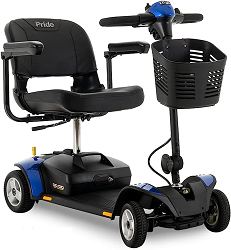
Rated #1 - The Go-Go Elite Traveller Mobility Scooter by Pride 4-Wheel
Real-World Transport: I’ve loaded this into the trunk of a standard sedan; the auto-latching frame separates easily with one hand, and the heaviest piece is only about 34 lbs, which is manageable for most active seniors to lift.
Stability vs. Agility: While the 4-wheel design gives you much better stability on outdoor sidewalks and uneven cracks compared to the 3-wheel version, remember the 44-inch turning radius means you might need to make a 3-point turn in very tight apartment hallways.
Smart Charging: You don't need to bend over to plug it in; the tiller-mounted charging port lets you plug the charger right into the handlebars, saving your back after a long day.
Battery & Range: The standard 12AH battery pack is lighter for transport, but if you plan on full-day outings like Disney or a state fair, I highly recommend upgrading to the 18AH battery for extended range.
-
Model ID: B079SLBTPR
View on Amazon
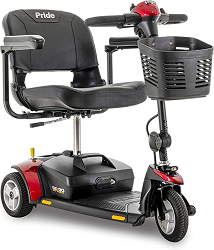
Rated #2 - The Go-Go Elite Traveller Mobility Scooter by Pride 3-Wheel
Indoor Agility: This is where the 3-wheel design shines; with its tight turning radius, I can spin this around in narrow apartment hallways or grocery store aisles where the 4-wheel version might get stuck doing a 3-point turn.
Extra Legroom: Because there are no front wheel wells getting in the way, the 3-wheel layout gives you significantly more legroom to stretch out, which is a huge plus if you are taller or have stiff knees.
Straight Handlebars: Note that this model comes with standard straight handlebars, not the wraparound "delta" tiller. If you have good grip strength, this is fine, but if you have arthritis in your hands, you might prefer the delta style found on other models.
Easy Transport: Just like its 4-wheel cousin, this breaks down into 5 lightweight pieces quickly; the heaviest piece is manageable, making it easy to pop into the trunk of a sedan without needing a vehicle lift.
-
Model ID: B079STGYC8
View on Amazon
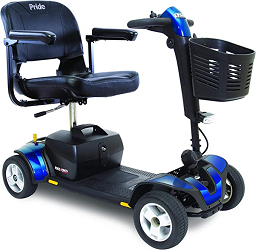
Rated #3 - The Pride Mobility S74 Go-Go Sport 4-Wheel Electric Mobility Scooter
Heavy-Duty Stability: This is the "big brother" to the Elite Traveller; the frame is reinforced to handle 325 lbs, and the longer wheelbase makes it feel much less "tippy" for taller or heavier riders compared to the standard travel scooters.
Outdoor Terrain: The tires are solid and slightly larger, giving you better ground clearance (3 inches); I’ve found this crucial for handling park grass or rougher asphalt without bottoming out the transaxle.
Battery Power: Unlike the smaller models, this comes with 18AH batteries standard, which you absolutely need to support the higher 4.7 mph top speed without draining your power halfway through the day.
Comfort & Safety: The deck is visibly longer, providing much-needed extra legroom for big-and-tall users, and the standard front LED headlight is a safety feature I always recommend if you plan on using it after dusk.
-
Model ID: B00PV2QSLW
View on Amazon
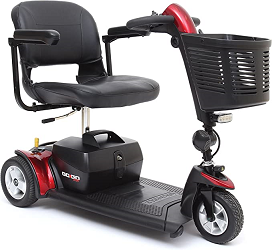
Rated #4 - The Pride Go-Go Sport 3 Wheel Mobility Scooter
Maximum Legroom: This model offers the most legroom of the entire travel lineup. The combination of the extended "Sport" deck and the open 3-wheel front design means you can fully stretch your legs, which is a lifesaver if you are over 6 feet tall or have stiff knees.
Heavy-Duty Agility: You get the massive 325 lb weight capacity of the Sport series, but with a super-tight 36-inch turning radius. It is one of the few heavy-duty scooters that can legitimately navigate the tight corners of older homes or cruise ships.
Stability Trade-off: As a technician, I have to warn you: because it sits higher and has 3 wheels, it is less stable on side-slopes than the 4-wheel version. I recommend this model primarily for flat paved surfaces or indoor use, not for uneven backyard grass.
Lighting & Power: Just like the 4-wheel version, this comes standard with the 18AH batteries and a bright front LED headlight, so you aren't sacrificing range (up to 12+ miles) just to get the tighter turning radius.
-
Model ID: B00BBU61VK
View on Amazon
What Are The Latest Innovations for Mobility Scooters?
Hi everyone! Welcome, I just wanted to inform you about mobility scooters and many of the latest innovations.
What is the current scooter technology in use today?
It's hard to keep track these days, but here are some ...
Lightweight and portable scooters:
Mobility scooters are becoming increasingly lightweight and portable, making them easier for seniors and disabled people to transport and store.
More powerful and efficient motors:
The motors in mobility scooters are becoming more powerful and efficient, allowing them to travel longer distances on a single charge.
More comfortable and stylish designs:
Mobility scooters are becoming more comfortable and stylish, making them more appealing to users.
Advanced features:
Some mobility scooters now come with advanced features such as built-in GPS, Bluetooth, and even voice control.
What are the future mobility scooter developments?
AI software is helping with many of the future advancements, here's some ...
Self-driving:
Self-driving scooters are being developed that could allow people with mobility impairments to travel more independently.
Intelligent:
Intelligent scooters are being developed that could be programmed to avoid obstacles and to follow a predetermined path.
Robotic:
Robotic scooters are being developed that could be controlled by thought or by a simple gesture.
3D printed:
3D printed scooters are being developed that could be customized to the individual user's needs.
Conclusion: These are just some of the amazing innovations in mobility scooters that are making them more appealing and enjoyable for people of all ages and abilities.
What conditions require people to use a mobility scooter?
There are many conditions, but here are some of the most common.
Age-related conditions:
Arthritis, osteoporosis, and other conditions that can make it difficult to walk.
Chronic health conditions:
Heart disease, lung disease, and cancer that can make it difficult to get around.
Injuries:
Broken bones, spinal cord injuries, and amputations that can make it difficult to walk.
Disabilities:
Cerebral palsy, muscular dystrophy, and multiple sclerosis that can make it difficult to walk.
What are the benefits of using a mobility scooter?
Electric mobility scooters are designed to help seniors and disabled people with mobility impairments, get around more easily. They are powered by batteries and can travel up to 40 miles on a single charge. They come in a variety of styles and sizes, so you can find one that is perfect for your needs.
Increased independence:
An electric mobility scooter can help you get around more easily, which can increase your independence. You will be able to go to the grocery store, run errands, and visit friends and family without having to rely on others for transportation.
Improved mobility:
An electric mobility scooter can help you improve your mobility. If you have difficulty walking, an electric mobility scooter can make it easier for you to get around. You will be able to walk further and faster, which can help you stay active and healthy.
Reduced pain:
If you have pain in your legs or back, an electric mobility scooter can help reduce that pain. An electric mobility scooter can take the stress off of your legs and back, which can help you feel better and be more active.
Increased safety:
An electric mobility scooter can help you stay safe. An electric mobility scooter has a low center of gravity, which makes it more stable than a wheelchair. An electric mobility scooter also has headlights and taillights, which can help you see and be seen at night.
What types of electric mobility scooters are there?
There are many different types of electric mobility scooters available for seniors, and the disabled. Some of the most common types include:
Portable scooters:
Portable scooters are designed to be easy to transport. They are typically lightweight and foldable, so you can easily take them with you in your car or on public transportation.
Heavy-duty scooters:
Heavy-duty scooters are designed for people who need a lot of power and stability. They are typically larger and heavier than portable scooters, but they can handle rough terrain and heavier loads.
All-terrain scooters:
All-terrain scooters are designed to handle any type of terrain. They have large tires and suspension that can handle bumps and potholes.
Off-road scooters:
Off-road scooters are designed for use in rugged terrain. They have large tires and suspension that can handle dirt, sand, and rocks.
How do I choose the right mobility scooter?
When choosing an electric mobility scooter, there are a few things you need to consider, such as:
Your needs:
What do you need the scooter for? Will you be using it for short trips around town or for longer trips?
Your budget:
How much are you willing to spend on an electric mobility scooter?
Your size and weight:
Make sure to choose a scooter that is the right size and weight for you.
Your terrain:
Where will you be using the scooter? If you will be using it on rough terrain, you will need a scooter that is designed for that type of terrain.
Conclusion: If you have trouble walking, an electric mobility scooter may be the perfect solution for you. Electric mobility scooters can help you increase your independence, mobility, and safety. There are many different types of electric mobility scooters available, so you can find one that is perfect for your needs.
What do I have to do before Medicare will pay for my mobility scooter?
Note: For private insurance, it's best to contact your provider (may require a prescription).
To be eligible for Medicare coverage of a mobility scooter, you must meet certain criteria. The first and most important
criterion is that you must have a medical need for the device. Specifically, you must have a condition that makes it
difficult or impossible for you to perform activities of daily living (such as bathing, dressing, or eating) without
assistance.
In addition to medical necessity, you must also meet the following criteria (verify with Medicare, things change):
You must be enrolled in Medicare Part B.
You must have a face-to-face examination with your doctor, who must document your medical need for the mobility scooter in your medical record.
Your doctor must provide a written prescription for the mobility scooter.
You must obtain the mobility scooter from a Medicare-approved supplier.
You must use the mobility scooter primarily in your home, but also have a need to use it outside of your home.
If you meet all of these criteria, Medicare will cover 80% of the cost of the mobility scooter, and you will be responsible for the remaining 20% coinsurance.
Navigating the Process:
Navigating the process of obtaining Medicare coverage for a mobility scooter can be challenging, especially if
you're not familiar with Medicare's rules and regulations. Here are some tips to help you navigate the process:
Talk to your doctor: Your doctor can help you determine whether a mobility scooter is medically necessary for you
and provide you with a written prescription.
Find a Medicare-approved supplier: Medicare will only cover the cost of a mobility scooter if it's obtained from
a Medicare-approved supplier. Your doctor or Medicare representative can help you find a supplier in your area.
Understand your Medicare coverage:
It's important to understand what is covered and what is not under Medicare. Talk to your Medicare representative or do some research
online to learn more about your coverage.
Keep good records:
Keep copies of all of your medical records, prescriptions, and bills related to your mobility scooter. This will make it easier to keep track
of your expenses and to file claims with Medicare.
More info on Medicare ...
The Pros & Cons of Using a Mobility Scooter
Mobility scooters can provide a much-needed sense of independence and allow them to continue to engage in
daily activities. However, there are also medical pros and cons that should be considered before deciding whether a
mobility scooter is the right choice.
The Pros ...
Increased mobility:
Mobility scooters can help seniors and disabled people, who have mobility issues, such as arthritis or a limited range of motion, move around independently.
Reduced fatigue:
For people who have difficulty walking long distances or standing for extended periods can benefit from using a mobility scooter, as it can reduce physical exertion and fatigue.
Improved posture:
Mobility scooters are designed to provide support for the back, reducing the risk of developing
pressure sores or back pain.
Accessibility:
Mobility scooters are designed to be accessible, making it easier for users to navigate curbs,
ramps, and other obstacles in public spaces.
Independence:
With a mobility scooter, you can perform everyday activities such as shopping, running errands,
and socializing independently.
The Cons ...
Cost:
Mobility scooters can be expensive, and not all insurance policies cover the full cost. Some people may need to pay out of pocket or seek other forms of financial assistance.
Maintenance:
Mobility scooters require regular maintenance to keep them in good condition, which can be expensive and time-consuming.
Weight limit:
Mobility scooters have a weight limit, and those who weigh over the limit may not be able to use
them safely.
Weather conditions:
Most mobility scooters are designed for use on smooth surfaces, and they may not be suitable for outdoor activities in inclement weather or on rough terrain.
Safety concerns:
People who use mobility scooters may be at a higher risk of accidents, such as tipping over or
colliding with objects. In addition, people who have cognitive impairments may have difficulty operating the scooter safely.
In conclusion: Mobility scooters can provide many medical benefits for seniors and disabled people, such as increased mobility, reduced
fatigue, improved posture, accessibility, and independence. However, they also have drawbacks, including cost, maintenance,
weight limit, weather conditions, and safety concerns. The user and their caregivers should carefully consider these pros
and cons before deciding whether a mobility scooter is the right choice and should seek guidance from a healthcare
professional to ensure that the device is used safely and effectively.